Haussmann’s Paris: How the Boulevards and Apartment Blocks Were Built
Haussmann's renovation of Paris ran from 1853 to 1870 under Napoleon III. Why the old centre was torn down, what replaced it and what you still see today.
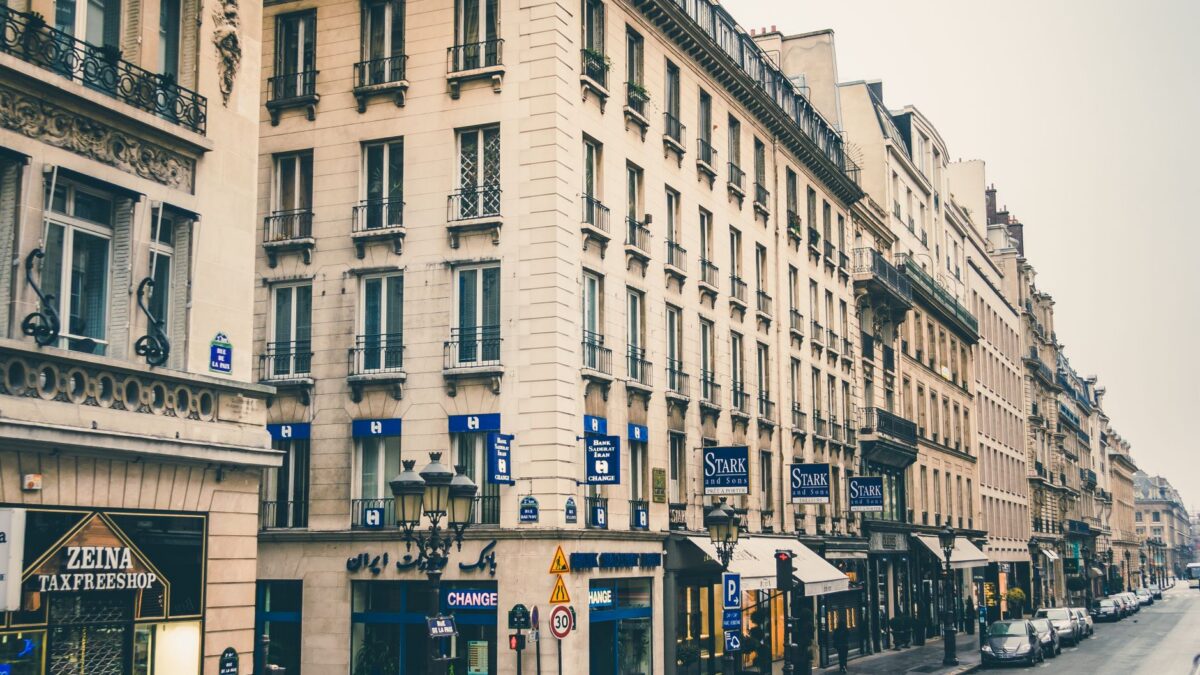
The wide boulevards, long rows of cream stone apartment buildings and big parks of central Paris mostly date from one programme of public works. Emperor Napoleon III ordered it, and his prefect of the Seine, Georges-Eugène Haussmann, ran it between 1853 and 1870. The French call it the travaux haussmanniens (the Haussmann works), and the street plan and look of the city centre today come largely from it.
What was Paris like before Haussmann?
By the middle of the 19th century, officials saw the centre of Paris as crowded, dark, dangerous and unhealthy. On the Île de la Cité and in the quartier des Arcis, between the Louvre and the Hôtel de Ville (City Hall), the street plan had barely changed since the Middle Ages. In the Arcis and Saint-Avoye neighbourhoods, in what is now the 3rd arrondissement, there was one inhabitant for every three square metres. A doctor in 1840 described a single room of 5 square metres on the fourth floor of a building on the Île de la Cité where twenty-three people lived, adults and children together.
Disease moved fast in those conditions. Cholera hit the city in 1832 and again in 1848, and in the 1848 epidemic five percent of the people in those two neighbourhoods died. Traffic was just as bad: the widest streets there were 5 metres across and the narrowest one or two metres, too tight for carts and carriages.
The old centre was also where revolts started. Between 1830 and 1848 there were seven armed uprisings in central Paris, around the Faubourg Saint-Antoine, the Hôtel de Ville and the Montagne Sainte-Geneviève on the Left Bank. Residents pulled up paving stones to barricade the narrow streets, and the army had to clear them.
Had anyone tried to fix the city before?
Yes, several times, with limited results. In the 18th century Voltaire complained about filthy markets in narrow streets and a Louvre façade hidden behind shabby buildings. During the Revolution, in 1794, a Commission of Artists drew up a plan for straight avenues and squares with radiating streets, including a line from the Place de la Nation to the Louvre, but none of it was built.
Napoleon Bonaparte started a canal to bring fresh water and began the rue de Rivoli at the Place de la Concorde, though he only got it as far as the Louvre before his fall. Under King Louis-Philippe, the prefect Rambuteau built new sewers (which still drained straight into the Seine), improved the water supply, laid 180 kilometres of sidewalks, opened the rue Lobau, built the Pont Louis-Philippe and cleared space around the Hôtel de Ville. The medieval core stayed largely intact.
Who was Baron Haussmann?
Georges-Eugène Haussmann was born on March 27, 1809, at 53 rue du Faubourg-du-Roule in Paris, to a family of Alsatian origin. He studied law and also music at the Paris Conservatory, then made his career as a government administrator in the provinces. His superiors found him hard-working but arrogant, which slowed his promotion. After 1848 he served as prefect of the Var, the Yonne and then the Gironde.
Louis-Napoléon Bonaparte, elected president in 1848, already wanted to extend the rue de Rivoli to the Hôtel de Ville and create the Bois de Boulogne, and he was frustrated by the slow pace of the prefect of the Seine, Jean-Jacques Berger. After his coup d’état in December 1851, he declared himself Emperor Napoleon III in 1852. His interior minister, Victor de Persigny, interviewed several regional prefects for the Paris job and picked Haussmann, who took office on June 23, 1853.
What did the rebuilding change?
The works demolished medieval neighbourhoods that officials judged overcrowded and unhealthy. In their place came wide avenues, new parks and squares, and new sewers, fountains and aqueducts. Paris also annexed the suburbs around it. Haussmann rebuilt the city below ground as well as above it: new sewers ran alongside miles of gas pipes that fed thousands of new streetlights. By his own estimate, one in five streets in central Paris in 1870 was his work. The rue du Jardinet on the Left Bank, for example, was torn down to make room for the Boulevard Saint-Germain.
The boulevards were lined with new apartment buildings of a fairly uniform type: dressed stone façades, wrought-iron balconies, shops at street level and mansard roofs with attic rooms. That repeated pattern is what most people mean by a “Haussmannian” building, and it is still the standard stock in much of central Paris. If you are flat-hunting, our guide to the best neighbourhoods for English-speaking newcomers covers areas where this kind of building dominates.
The showpiece of the period is the Paris Opera, designed by Charles Garnier, which the Wikipedia biography of Georges-Eugène Haussmann describes as the largest theatre in the world at the centre of Napoleon III’s new city.
Where did the big parks come from?
With his right-hand man Adolphe Alphand, and on the Emperor’s orders, Haussmann planned four large parks at the points of the compass: the Bois de Boulogne to the west, the Bois de Vincennes to the east, the Parc des Buttes Chaumont to the north and the Parc Montsouris to the south. These parks, and smaller squares inside the city, were popular with Parisians of every class from the start.
Why was Haussmann dismissed?
The programme met fierce opposition, and critics forced Napoleon III to dismiss Haussmann in 1870; his term as prefect ended on Jan. 5, 1870. He had been made a senator in 1857 and a grand cross of the Legion of Honour in 1862, and he later sat in the Chamber of Deputies for Corsica. He died in Paris on Jan. 11, 1891, and is buried in Père Lachaise Cemetery.
His projects outlived him. According to the Wikipedia article on Haussmann’s renovation of Paris, work continued until 1927, and the rebuilt city was the setting for the Belle Époque, from 1871 to 1914. The painter Gustave Caillebotte is the artist most closely tied to the new Paris, which he painted street by street.
Where can you see Haussmann’s Paris today?
Most of central Paris shows it. The Boulevard Saint-Germain, the extended rue de Rivoli and the Opera district are the clearest examples, and the Boulevard Haussmann and the Haussmann-Saint-Lazare station carry his name. The four parks are open to walkers; our comparison of a Navigo pass against single tickets helps if you plan several trips in a day.
Quick answers
When did Haussmann rebuild Paris?
The programme ran from 1853 to 1870, while Haussmann was prefect of the Seine under Napoleon III. Some projects continued until 1927.
Why were the old streets demolished?
Officials saw the medieval centre as overcrowded and unhealthy, with cholera outbreaks in 1832 and 1848, streets too narrow for traffic and a record of barricades during uprisings.
Did Haussmann design the buildings himself?
No. He was an administrator who directed the programme. Architects such as Charles Garnier designed individual landmarks, and Adolphe Alphand worked on the parks.
Is the Opera Garnier part of Haussmann’s Paris?
Yes. Garnier’s opera house is the signature landmark of the period and sits at the centre of the new street plan.
Checked against official sources in November 2026. Hours, prices and rules change: confirm on the official page before you go or apply.