Musée d’Orsay Visit Guide: Hours, Tickets and Best Works
Opening hours, the price of a ticket, who enters free and how to see the key works in an hour and a half.
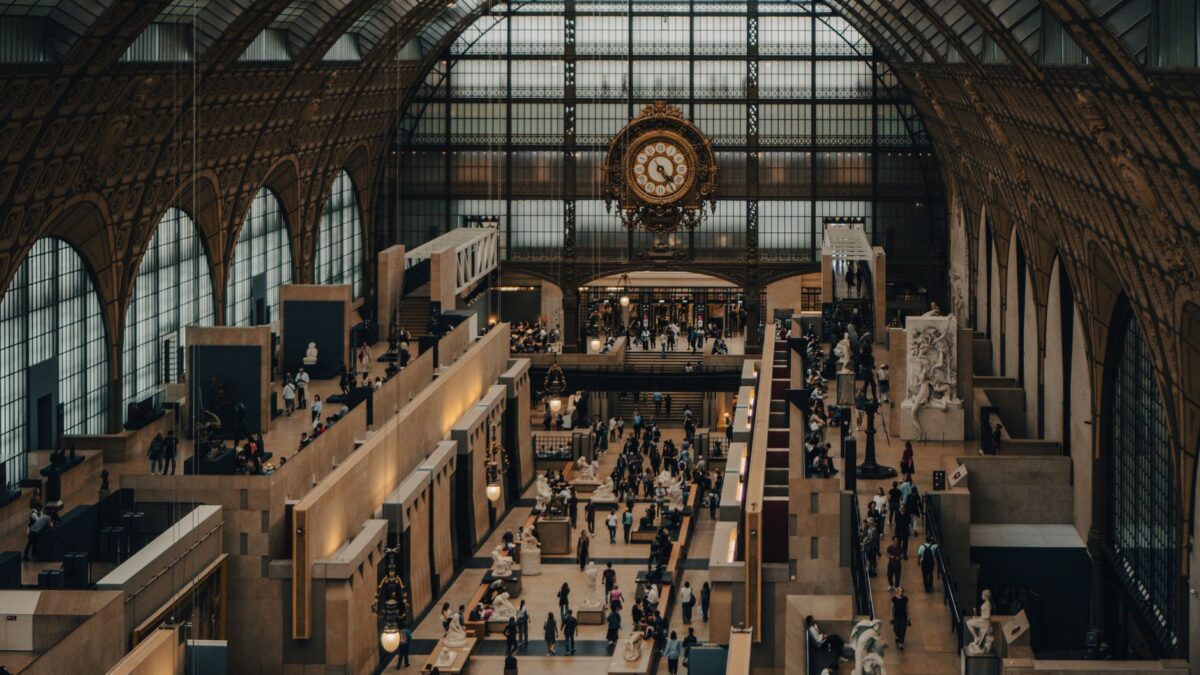
The Musée d’Orsay is open Tuesday to Sunday 9:30-18:00, with a late opening until 21:45 on Thursdays, and it is closed on Mondays. A full-price ticket costs €16 online as of November 2026, and a timed slot is required for everyone. Under-18s and EU/EEA residents aged 18-25 enter free.
When is the Musée d’Orsay open?
The museum is in a former railway station on the Left Bank. The official site lists these hours as of November 2026:
- Tuesday, Wednesday, Friday, Saturday, Sunday: 9:30-18:00.
- Thursday: 9:30-21:45, with last entry at 21:00.
- Closed: every Monday, 1 May and 25 December.
Thursday evenings have a reduced rate and are generally quieter after 18:00. Hours change for special events, so confirm on musee-orsay.fr before you go.
How much does a ticket cost?
| Ticket | Price (as of November 2026) |
|---|---|
| Full price, bought online | €16 |
| Full price, bought at the museum | €14 |
| Thursday evening, online | €12 |
| Thursday evening, at the museum | €10 |
| Under 18, disabled visitor and one companion, EU/EEA aged 18-25 | Free |
Prices at the museum desk and online differ, so read the page you are buying from. Third-party sites that resell tickets add fees.
Do I need to book a time slot?
Yes. A timed slot is mandatory for all visitors from 10 March 2026, a rule linked to building works that the museum and the Paris Museum Pass site say will run until the summer of 2028. This includes Pass holders. If you turn up without a ticket, the museum may let you into a separate queue if slots remain, but do not plan around it. Book the slot the day before at least. If you hold a pass, our Museum Pass guide explains how the slot fits with it.
Is the Musée d’Orsay free on the first Sunday?
Yes, on the first Sunday of each month entry is free for everyone, but a reservation is required, and groups of seven or more are not accepted that day. The free tickets are released on the official booking site and go fast. The museum also announced free access for all on Saturday 5 and Sunday 6 December 2026 for its 40th anniversary, with booking recommended. See free museums in Paris for other Sunday options.
What should I see in an hour and a half?
The collection concentrates French art from about 1848 to 1914, and the most-visited rooms are on the upper floor. Rooms are rehung from time to time, so use the museum’s map and plan of the day. A workable route:
- Ground floor, 10-15 minutes: the sculpture hall under the great glass roof and the early realist and academic paintings that explain what the Impressionists were reacting to.
- Top floor, 45 minutes: the Impressionist galleries with Monet, Renoir, Degas, Pissarro and Morisot, the clearest starting point if you know one name.
- Post-Impressionist rooms, 20 minutes: Van Gogh, Cézanne and Gauguin.
- Leave 10 minutes for one of the big station clocks, which gives a view across the Seine to Montmartre.
Many visitors skip the Art Nouveau rooms on the middle level; they are quieter and worth the time if you want a break from the crowds.
Is there somewhere to stop for a coffee?
There are cafés and a restaurant in the museum, and one café sits behind a large glass station clock on an upper level, with a view of the river. Opening times follow the museum’s, and queues build at midday. Check the museum map on the day, since catering sites sometimes close for works.
What are the best ways to avoid the crowds?
The Thursday evening opening is the calmest time, and the first slot after opening is the next best. The Impressionist galleries on the top floor fill from late morning, so visit them first and the ground floor last. Weekends and school holidays are busier. If you want to see the clock rooms and the café without a crowd, go in the last two hours of a Thursday opening, when most day visitors have left.
Which museums nearby can I pair with it?
The Orsay sits on the Left Bank across the river from the Tuileries, so the Musée de l’Orangerie is a short walk, and the Louvre is across the Pont Royal. A day with the Orsay in the morning and the Orangerie in the afternoon works well because both are compact. Our list of museums beyond the Louvre compares more options.
Bottom line
If you only have time for one major art museum, the Orsay is easier to manage than the Louvre: smaller, better arranged and cheaper. Take a Thursday evening slot if you want fewer people, and use the free first Sunday only if you can book early. Put the Musée de l’Orangerie on the same day if you want Monet’s Water Lilies, since both sit near the Seine.
FAQ
How long does a visit take?
Plan 90 minutes for the highlights and two to three hours for a relaxed visit with an exhibition.
Are temporary exhibitions included?
The standard ticket covers the permanent collections and, in most cases, the current exhibitions on the museum’s list. Check the booking page before you buy because a few exhibitions use a separate ticket.
Can I take photos?
Photography without flash is generally allowed in the permanent collections, but rules vary by room and exhibition. Follow the signs.
Is the museum accessible?
Yes, the museum has lifts and facilities for visitors with reduced mobility, and disabled visitors and one companion enter free.