Best Museums in Paris Beyond the Louvre: Compared
Eight museums, one table. Compare what each shows, what it costs, when it closes and who gets in free.
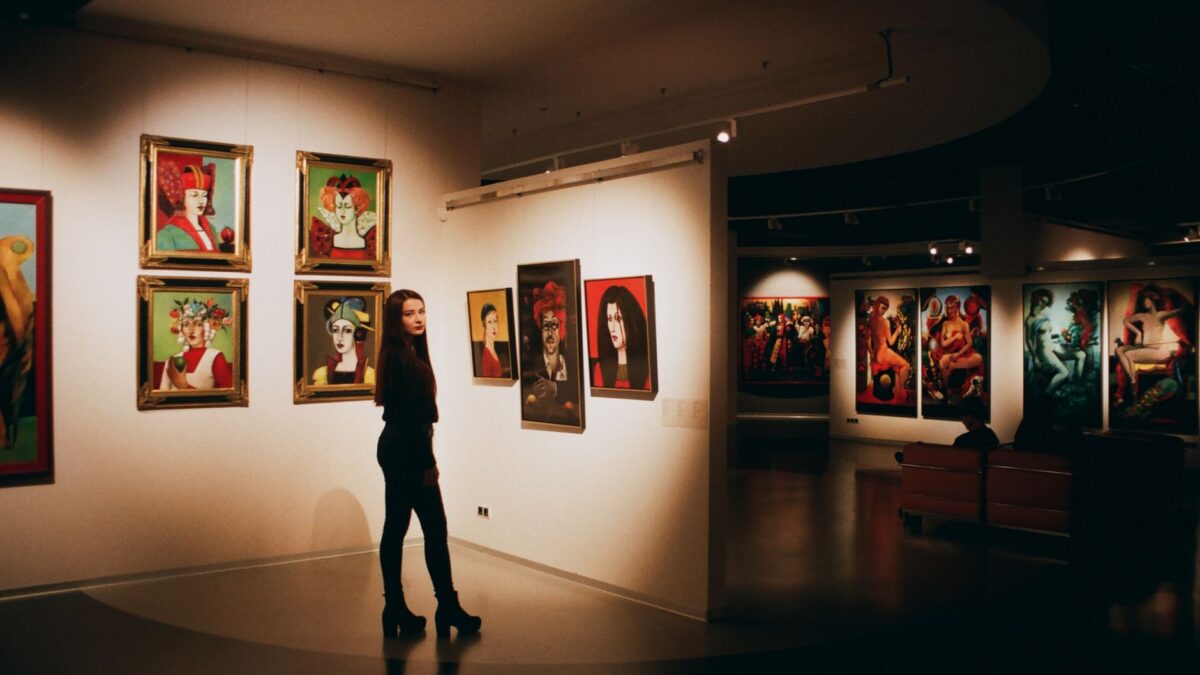
Beyond the Louvre, the best Paris museums for most visitors are the Musée d’Orsay for Impressionism, the Orangerie for Monet’s water lilies, the Musée Rodin for sculpture, and the free Carnavalet and Petit Palais for city history and art. Prices and closing days differ, so use the table and confirm on the museum’s site.
How do the museums compare?
Prices below are the figures found in official or visitor sources checked for this guide, and several were not confirmed on the museums’ own pages. Treat all as of November 2026 and check before you buy. Most national and city museums close one day a week, usually Monday or Tuesday, and under-26 residents of the EU often enter national museums free with ID.
| Museum | Focus | Adult price (approx.) | Closed day | Time needed |
|---|---|---|---|---|
| Musée d’Orsay | Impressionism and 19th-century art | 16 € online, 14 € on site per official figures found | Check (one booking site says Monday) | 2–3 hours |
| Musée de l’Orangerie | Monet’s Water Lilies, early modern art | 12.50 € | Tuesday | 1–1.5 hours |
| Musée Rodin | Sculpture, house and garden | About 13–14 € | Monday | 1.5–2 hours |
| Musée Picasso | Picasso’s works and personal collection | Not confirmed; check official site | Check; usually Monday | 1.5–2 hours |
| Musée Carnavalet | History of Paris | Free permanent collection | Monday | 1.5–2 hours |
| Petit Palais | Fine arts from antiquity to 1900 | Free permanent collection | Monday | 1–2 hours |
| Musée du quai Branly | Art from Africa, Asia, Oceania and the Americas | Not confirmed; check official site | Check; usually Monday | 2 hours |
| Musée de Cluny | Medieval art, including the Lady and the Unicorn tapestries | Not confirmed; check official site | Check; usually Monday | 1–1.5 hours |
The Carnavalet and Petit Palais are run by the City of Paris, which keeps their permanent collections free; temporary exhibitions are paid. Confirm closing days on paris.fr.
Which museum is best for Impressionism?
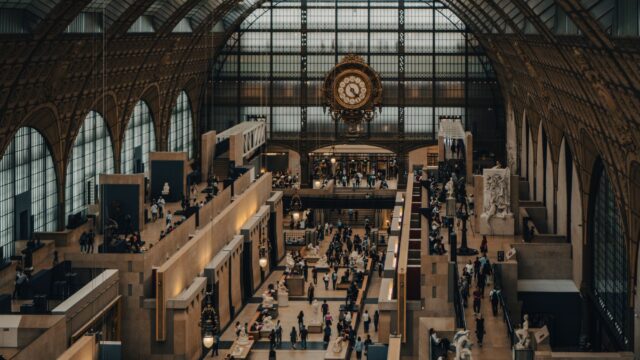
The Musée d’Orsay, housed in a former railway station, has the largest set of works by Monet, Renoir, Degas, Van Gogh and Cézanne in one place. Our Orsay guide covers tickets and timing. The official Orsay site listed 16 € online and 14 € on site for the full price, with a reduced Thursday evening rate and closing at 21:45 that evening. For Monet specifically, add the Orangerie.
Which are free?
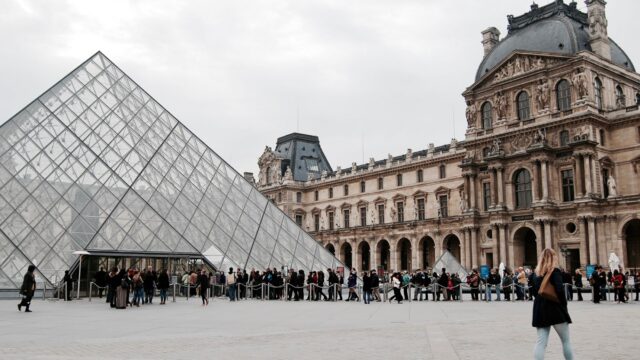
The permanent collections of the Carnavalet and the Petit Palais are free, which makes them good rainy-day options. Many national museums are free for everyone on the first Sunday of each month in winter, and for under-26 EU residents all year; see our free first Sunday guide for details and the museums included. The Louvre has its own timed-entry rules, covered in the Louvre guide.
Which museums suit different interests?
- Art lovers on a short stay: Orsay plus the Orangerie.
- People who like sculpture and gardens: Musée Rodin.
- History fans: Carnavalet for the story of Paris, Cluny for the Middle Ages.
- People who want something different: Quai Branly, for non-European art in a building by Jean Nouvel.
- Modern art: see our Centre Pompidou closure guide.
How do you save money?
Compare single tickets against the Paris Museum Pass if you plan three or more paid sites in a few days. Book timed slots online, which is sometimes cheaper and always faster than the ticket desk. Use free collections to fill gaps, and check eligibility for age-based free entry: you need ID with proof of age and, for the EU rule, proof of residence.
How should you plan the day by neighborhood?
Paris museums cluster by area, and grouping them saves metro time. On the Left Bank, the Orsay and the Musée Rodin are about 15 minutes apart on foot, and the Quai Branly is a short walk from the Eiffel Tower. Cluny sits in the Latin Quarter near the Sorbonne, within walking distance of the Jardin du Luxembourg (see our garden guide). In the Marais, the Carnavalet and the Picasso museum are a few minutes’ walk apart, and you can combine them with the Place des Vosges. The Petit Palais is across from the Grand Palais, near the Champs-Élysées and the Seine.
Opening hours differ and special exhibitions sometimes require a separate ticket, so look up the day’s hours. Late openings, such as Orsay’s Thursday evenings, are useful for fitting a museum around dinner.
What should you check before you go?
- The weekly closed day, and holidays such as 1 May and 25 December.
- Whether your date needs a time slot, especially for the Orsay and the Orangerie.
- Free-entry rules: age limits, residence proof and first Sunday exceptions.
- Bag and umbrella rules, since most museums have a cloakroom and size limits.
Bottom line
Choose two museums per day at most, grouped by location: Orsay with the Orangerie or Rodin on the Left Bank and the Tuileries, Carnavalet in the Marais, Petit Palais near the Champs-Élysées. Look up the closed day first, and keep one free museum as a fallback.
FAQ
Which Paris museum is best after the Louvre?
For most visitors it is the Musée d’Orsay, because of its Impressionist collection.
Are Paris museums free for students?
Under-26 EU residents often enter national museums free; other students may get reduced rates with a valid card.
Do I need to book?
Booking a time slot is recommended for Orsay, the Orangerie and others; free museums may not require booking.
Which museums are closed on Mondays?
Many, including the Rodin and the city museums; check each museum’s calendar.