Bastille Day History: How July 14 Became France’s National Day
Bastille Day marks the storming of the Bastille on July 14, 1789, and the Fête de la Fédération of 1790. How the date became France's national holiday.
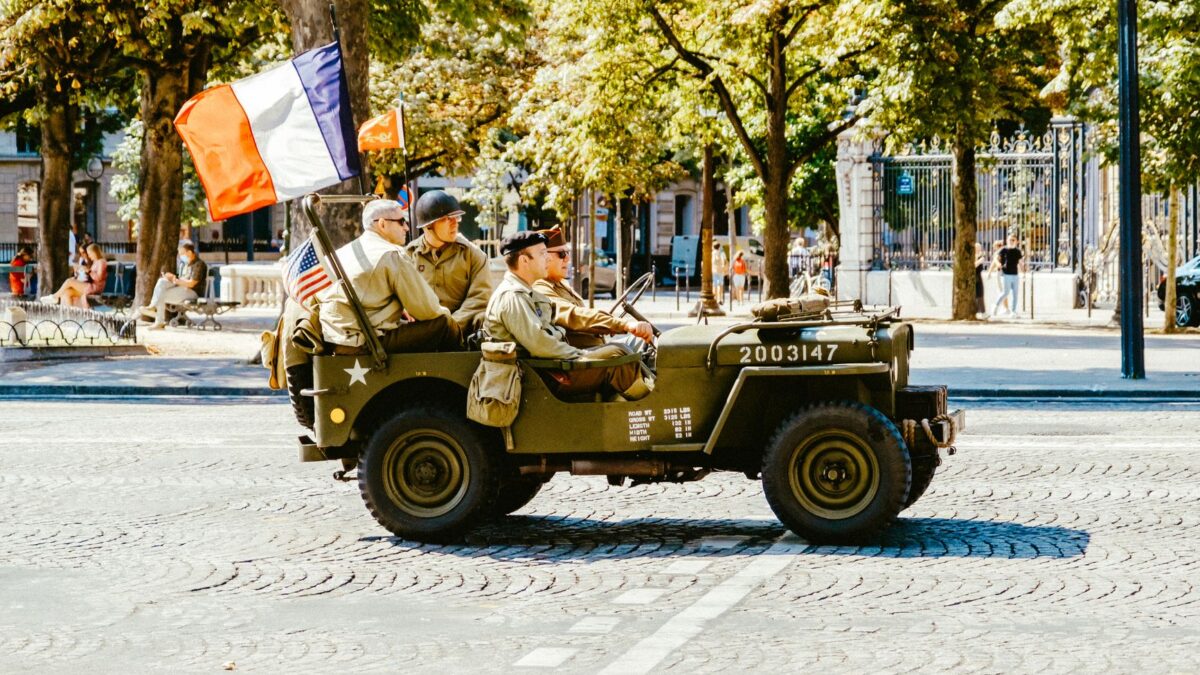
Bastille Day, known in France as le 14 juillet or la fête nationale, commemorates two events: the storming of the Bastille prison in Paris on July 14, 1789, and the Fête de la Fédération, a festival of national unity held on the first anniversary, July 14, 1790. A campaign under the Third Republic in 1880 brought the date back as an annual national festival, and July 14 is still France’s national day.
The story runs from a royal finance crisis to a crowd at the gates of a half-empty fortress, and then to a festival on the Champ de Mars.
Why was France in crisis in 1789?
Under Louis XVI, France faced a severe economic crisis, driven partly by the cost of intervening in the American Revolution, by regressive taxes and by poor harvests in the late 1780s. The Estates General, an old assembly of the clergy, the nobility and the commoners, met on May 5, 1789, to deal with it, but stalled over procedure and the resistance of the nobility.
On June 17, the Third Estate, which represented the commoners, declared itself the National Assembly with the aim of writing a constitution. On June 20, its members vowed to do so. The king first opposed this, then had to accept it, and on July 9 the body renamed itself the National Constituent Assembly. Paris backed the Assembly, and the gardens of the Palais-Royal turned into a nonstop public meeting.
What set off the storming of the Bastille?
On July 11, 1789, the king dismissed and banished his finance minister, Jacques Necker, who was seen as sympathetic to the Third Estate. The news reached Paris on the afternoon of July 12, and many Parisians read it as the start of a conservative coup.
Royal troops had been brought toward Versailles, Sèvres, the Champ de Mars and Saint-Denis, and about half of the 25,000 regular soldiers in Paris and Versailles came from foreign regiments. More than 10,000 people gathered at the Palais-Royal, where the journalist Camille Desmoulins urged the crowd to take up arms. Protesters clashed with royal cavalry near the Tuileries, and a cavalry charge cleared Place Louis XV, today’s Place de la Concorde. Crowds also attacked customs posts that they blamed for high food and wine prices.
What happened on July 14, 1789?
Early on July 14, a crowd besieged the Hôtel des Invalides to seize the muskets and cannons stored in its cellars. The same day, another crowd attacked the Bastille, a medieval fortress and state prison that was believed to hold ammunition and gunpowder.
The Bastille stood for royal power in the middle of Paris. It had held people jailed under lettres de cachet, royal orders that gave no reason and could not be appealed. On the day of the attack it held only seven prisoners, and it was already due to be demolished.
Mutinous soldiers of the Régiment des Gardes Françaises (the French Guards) joined the crowd. The governor, Bernard-René Jourdan de Launay, opened the gates, but fighting broke out again, and de Launay and several defenders were killed after the surrender. Jacques de Flesselles, the prévôt des marchands (head of the city’s merchants, a role close to a mayor), was also killed.
Casualty figures differ. The Wikipedia article on the storming of the Bastille gives four hours of fighting and 94 deaths, while the Wikipedia article on Bastille Day cites official documents recording about 200 attackers and one defender killed before the capitulation.
The weeks that followed moved fast. On the night of Aug. 4, the Assembly abolished feudalism, and on Aug. 26 it proclaimed the Declaration of the Rights of Man and of the Citizen.
What was the Fête de la Fédération?
Plans for a national festival began in 1789 itself. A textile worker, Clément Gonchon, presented his design for an anniversary festival on Dec. 9, 1789. The official version, sponsored by the National Assembly, became the Fête de la Fédération on July 14, 1790.
It was held on the Champ de Mars, then well outside the city. When work on the site fell behind, thousands of Parisians turned out to finish it, a day remembered as the Journée des brouettes (the Day of the Wheelbarrow). On the day, the National Guard marched along the boulevard du Temple in heavy rain and was met by an estimated 260,000 people. Talleyrand, bishop of Autun, said mass, and Lafayette and then Louis XVI swore an oath to the constitution. A four-day popular feast followed.
How did July 14 become the national holiday?
The date returned under the Third Republic. On June 30, 1878, Paris held an official feast to honor the Republic, a scene Claude Monet painted. On July 14, 1879, a semi-official celebration included a reception in the Chamber of Deputies led by Léon Gambetta.
In 1880, the government set out to revive the July 14 festival, with a campaign backed by Gambetta and the scholar Henri Baudrillant. On May 21, 1880, Benjamin Raspail proposed a law, signed by sixty-four members, for the Republic to adopt July 14 as an annual national festival. Other dates were debated, including Aug. 4, the end of feudalism. For how the modern institutions that now host the day fit together, see this plain-English guide to how France’s government works.
How is Bastille Day celebrated today?
Celebrations take place across France, with military parades, fireworks, concerts and balls. In Paris, a military parade on the Champs-Élysées is held in front of the President of France, other officials and foreign guests; it has been reported as the oldest and largest military parade in Europe. The next Bastille Day falls on July 14, 2027, and you can plan around it with this list of public holidays in France in 2027 and bridge days.
Quick answers
Is Bastille Day called Bastille Day in France?
No. The English name is Bastille Day. In French the holiday is le 14 juillet, its legal name, and the press also calls it la fête nationale.
How many prisoners were in the Bastille when it fell?
Seven, and none was of great political importance.
Where did the Fête de la Fédération take place?
On the Champ de Mars, which was then far outside Paris, on July 14, 1790.
Where is the main parade in Paris?
On the Champs-Élysées, in front of the President of France.
Checked against official sources in November 2026. Hours, prices and rules change: confirm on the official page before you go or apply.