Louvre History: From Medieval Fortress to Royal Palace to Museum
The Louvre began around 1190 as a fortress, became a royal palace under Francis I and opened as a museum on Aug. 10, 1793. Dates, wings and what remains.
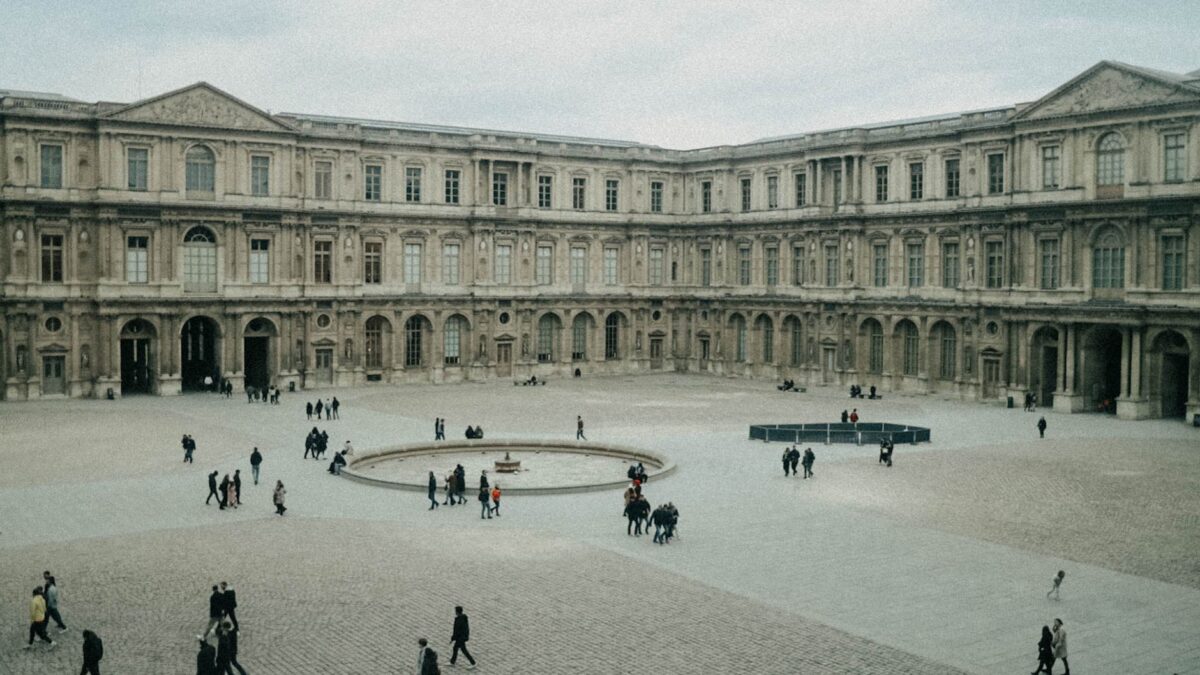
The Louvre started around 1190 as a castle guarding the western side of Paris, became the main home of the French kings in 1546 and opened as a public museum on Aug. 10, 1793. Most of the building you see today went up in the 17th and 19th centuries, and the glass pyramid in the courtyard dates from 1988. Pieces of the medieval fortress still survive underground, below the museum.
A castle on the city wall
According to the Louvre Palace entry on Wikipedia, construction began around 1190, at the same time as the Wall of Philip II Augustus, the new defensive wall around Paris. The castle protected the western approach to the city. At the time the Kingdom of England still held Normandy, so an attack from the west was a real threat. Historians do not know for certain whether Philip built from scratch or reworked an older tower already on the site, and the origin of the name “Louvre” is also disputed.
As Paris grew beyond its walls, the fortress lost its military purpose. Remains of this medieval Louvre are displayed underground, below the Sully Wing.
From fortress to royal palace
The Louvre served as a royal residence on and off between the 14th and 18th centuries. The big change came under Francis I, who made it the primary residence of the French kings in 1546. In the late 1540s he began replacing the enlarged medieval castle with a building inspired by classical antiquity and the Italian Renaissance. Its Lescot Wing, from that period, is the oldest part of the Louvre still standing above ground.
Next door, Queen Catherine de’ Medici created the Tuileries Palace in 1564, to the west. For more than three centuries the two palaces developed together. A plan known as the “Grand Design” joined them physically once the Pavillon de Flore was finished in the early 1600s.
The royal compound also absorbed its neighbors. The Hôtel du Petit-Bourbon, east of the Louvre, was taken by the crown after the Constable of Bourbon’s betrayal in 1523, and most of it was demolished in October 1660 to make room for expansion.
How the kings left and the artists moved in
In 1682 Louis XIV chose the Palace of Versailles for his household. The Louvre became mostly a place to show the royal collection, which from 1692 included ancient Greek and Roman sculpture. That same year two royal academies moved in, the Académie des Inscriptions et Belles-Lettres and the Académie Royale de Peinture et de Sculpture. The painting academy held the first of its salons (public art exhibitions) there in 1699 and stayed in the building for 100 years.
The Tuileries took the political role. From October 1789, when Louis XVI and his court returned from Versailles, it was the main seat of executive power in France until it was set on fire during the Paris Commune of 1871. Its main block was demolished in 1883. The Pavillon de Flore and the Pavillon de Marsan, which once marked the ends of the Tuileries, now count as part of the Louvre Palace.
The museum opens in 1793
During the French Revolution, the National Assembly decided that the Louvre should display the nation’s masterpieces. The museum opened on Aug. 10, 1793, with 537 paintings, most of them former royal property or works confiscated from the church, according to the Louvre entry on Wikipedia. Structural problems closed it from 1796 until 1801.
Under Napoleon the collection grew with art looted across Europe, Egypt and Syria, and the museum took the name Musée Napoléon. After his abdication, many of those works went back to their owners. The collection kept growing under Louis XVIII and Charles X, the Second Empire added 20,000 pieces, and donations and bequests have added more since the Third Republic. The Denon Wing is named after Vivant Denon, the museum’s first director.
Who could get in, and when
Access was uneven for a long time. In 1793 France used the Republican calendar, with ten-day weeks, and the first six days were kept for artists and foreigners while the last three were for the general public. In the early 1800s the public could visit only between 2pm and 4pm on Saturdays and Sundays. A rule from 1824 limited the public to Sundays and holidays.
In 1855 the museum opened to everyone every day except Mondays. Entry stayed free until 1922, when a fee was introduced for every day except Sunday. Since it reopened in 1946 after World War II, the Louvre has closed on Tuesdays. For today’s prices and entrances, see our guide to Louvre tickets and timed entry.
The Grand Louvre and the pyramid
The building was enlarged again in the 19th century, during Napoleon III’s expansion, and in the 20th century. The Grand Louvre project of the late 1980s and 1990s added gallery space and made the museum easier to reach. The Louvre Pyramid has stood in the Cour Napoléon since 1988, and since 1993 the main entrance has been the underground Hall Napoléon below it. Most of the old street-level entrances are now closed for good. A second entrance, the Porte des Lions near the western end of the Denon Wing, opened in 1999 but is not always open.
The museum now names its three groups of buildings after historical figures: the Sully Wing around the square Cour Carrée to the east, the Denon Wing along the Seine to the south and the Richelieu Wing along the rue de Rivoli to the north. The École du Louvre, the Musée des Arts Décoratifs and the national museum research and restoration center also occupy parts of the palace.
The Louvre by the numbers
- Palace floor area: 244,000 m2.
- Objects in the collection: approximately 500,000, with 35,000 works on display.
- Exhibition area: 72,735 m2, which Wikipedia says makes it the largest museum in the world.
- Visitors in 2025: 9.0 million. Wikipedia ranks it as the most-visited museum of any kind.
- Curatorial departments: eight, from Egyptian Antiquities to Prints and Drawings.
If you are planning a museum day, our comparison of the best museums in Paris beyond the Louvre covers the alternatives, and the history of the Eiffel Tower tells the story of another Paris landmark.
Seeing the history on a visit
The museum sits on the Right Bank of the Seine in the 1st arrondissement, next to the Tuileries Gardens. The nearest Métro stations are Louvre-Rivoli and Palais Royal-Musée du Louvre; the second connects underground to the Carrousel du Louvre shopping mall. The remains of the medieval fortress are in the Sully Wing basement. Cameras and video are allowed inside, but flash photography is not.
Quick answers
When was the Louvre built?
Work on the first castle began around 1190 under Philip II. The oldest part still above ground, the Lescot Wing, dates from the late 1540s, and most of the current palace is from the 17th and 19th centuries.
Why did the kings leave the Louvre?
Louis XIV moved his household to Versailles in 1682. The Louvre then held the royal collection and, from 1692, two royal academies.
When did the Louvre become a museum?
It opened on Aug. 10, 1793, during the French Revolution, with 537 paintings.
Is the Louvre open every day?
No. It has closed on Tuesdays since 1946 and also closes on some holidays. Check the museum’s official site for current hours.
Checked against official sources in November 2026. Hours, prices and rules change: confirm on the official page before you go or apply.