Seine River Cruises Compared: Prices, Length and Departures
Four main operators, two types of boat. Here is how the cruises differ in price, duration and departure point.
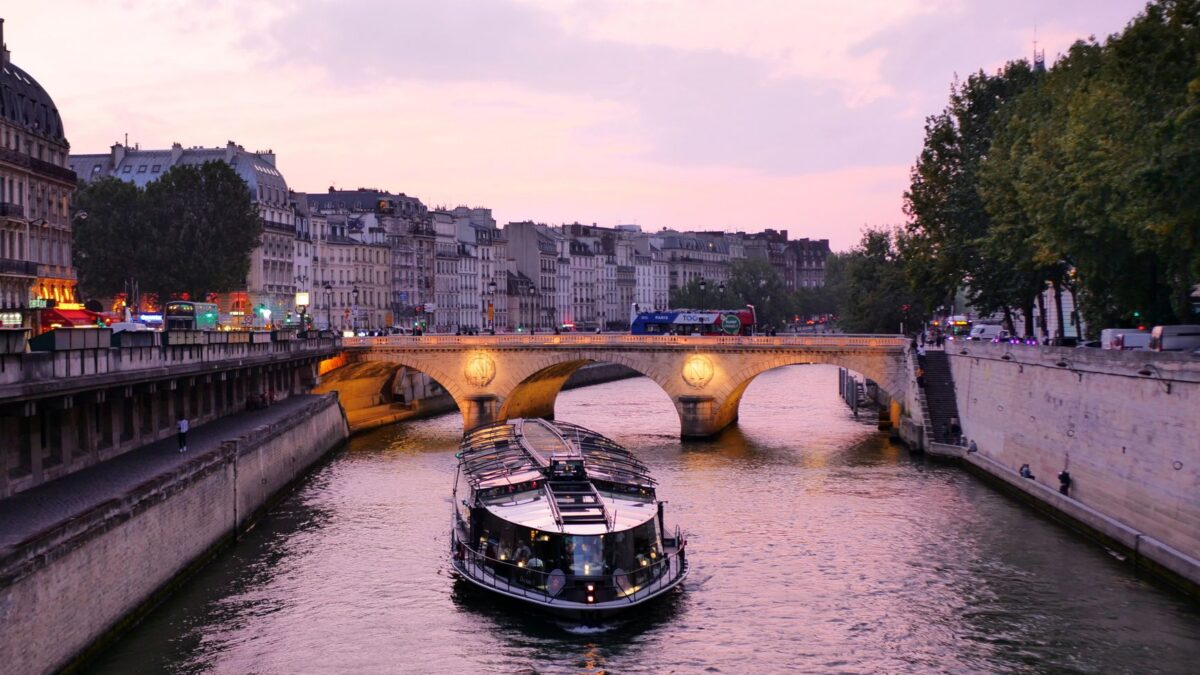
A standard sightseeing cruise on the Seine lasts about one hour to one hour ten minutes and, as of 2026, costs roughly 13 to 17 € per adult when booked online with the main operators. Dinner cruises cost much more, and the Batobus is a separate hop-on, hop-off boat sold as a multi-hour pass.
How do the main Seine cruise companies compare?
Prices below come from reseller and comparison pages published in 2026, because we could not load the operators’ own tariff pages. Online prices are normally lower than ticket-desk prices, by about 2 to 3 € per person according to the guides consulted. Treat the numbers as ranges for planning and confirm on each operator’s website.
| Operator | Type | Departure | Length | Adult price (2026, approx.) |
|---|---|---|---|---|
| Bateaux Parisiens | Sightseeing cruise with audio commentary | Near the Eiffel Tower (Port de la Bourdonnais) | About 1 hour | About 17 € |
| Bateaux-Mouches | Sightseeing cruise | Pont de l’Alma | About 1 hour 10 minutes | About 17 € |
| Vedettes du Pont Neuf | Sightseeing cruise | Square du Vert-Galant, Île de la Cité | About 1 hour | About 13–15 € |
| Vedettes de Paris | Sightseeing cruise | Near the Eiffel Tower | About 1 hour | About 15–16 € |
| Batobus | Hop-on, hop-off boat bus | Several piers along the river | Pass by duration | 24-hour pass about 23 € (reseller figure) |
Children aged 4 to 11 pay roughly 7 to 13 € depending on the operator, and younger children are free or nearly so. Always confirm on the operator’s site.
What is the difference between a cruise and the Batobus?
A sightseeing cruise is a round trip: you board and return to the same pier, with commentary in several languages. The Batobus is a river shuttle with stops at places like the Eiffel Tower, Musée d’Orsay, Notre-Dame and the Jardin des Plantes; you buy a pass for a set number of hours or days and get on and off. It has no full commentary. The Batobus makes sense if you want to use the river as transport between sights, and a one-hour cruise is simpler for a first look. See our Navigo and ticket guide if you are comparing with metro costs. The Batobus is not part of the Navigo network, so a metro pass does not cover it.
Are dinner cruises worth it?
Dinner cruises last roughly two and a half to three hours, and 2026 guides quote menu prices from about 89 € to 165 € per person depending on the formula. You pay for the meal and the setting rather than the boat ride. Quality varies, and you usually have fixed tables and a set menu. If you only want the lights at night, a standard evening sightseeing cruise gives the same river route for a fraction of the price, and you can eat beforehand.
What are the winter schedules like?
Departures are less frequent in winter, with fewer boats per hour and an earlier last cruise. Some companies run boats every 30 to 45 minutes in busy months and every hour or so in quieter ones, and indoor seating is heated or glassed. Check the timetable on the day, because cold, fog, high water or flooding can reduce or cancel sailings. In rare high-water periods, boats cannot pass under low bridges, and companies post notices.
Which is the best time of day?
For photos, golden hour before sunset gives warm light on the stone, and after dark the monuments are lit. In winter the sun sets early, so a late-afternoon cruise lets you see both day and night views. Mid-morning is usually the quietest. Take a seat on the open upper deck for views and a seat inside for warmth; many boats have both.
How do you book?
- Pick the departure area that suits your day: Eiffel Tower, Pont de l’Alma or Île de la Cité.
- Book a dated online ticket on the operator’s site, which is usually cheaper than the pier.
- Arrive 15 to 20 minutes early at the pier, since queues form for the best seats.
- Keep the confirmation on your phone, and check the cancellation terms.
For another way to see the city centre, see our winter things to do.
Which pier is most convenient?
The Eiffel Tower piers suit visitors who plan to see the tower the same day, and boats there head upstream past the Musée d’Orsay and Notre-Dame, then turn around. The Pont de l’Alma pier is a short walk from the Champs-Élysées district and the Bateaux-Mouches dock. The Vert-Galant pier sits at the western tip of the Île de la Cité, next to the Pont Neuf, and is close to the Sainte-Chapelle and the Louvre, which makes it handy when you are already in the center. All are reachable by metro or RER, and our Eiffel Tower guide shows how to combine a cruise with a visit.
What do you see on the route?
A typical hour-long cruise passes the Eiffel Tower, the Pont Alexandre III, the Musée d’Orsay, the Louvre, the Île de la Cité with Notre-Dame, and the Île Saint-Louis, with the exact order depending on the departure point. After the Notre-Dame restoration, the cathedral’s roofline is visible again from the river. Commentary names the bridges and monuments in several languages, and some operators offer a live guide on certain sailings.
Any practical tips?
- Bring a coat even on a mild day, because it is colder on the water.
- Large bags are usually fine, but there is no storage.
- Check the last departure time, which is earlier in winter.
- Keep your ticket on your phone, because some piers have patchy signal.
Bottom line
For a single trip, pick the pier closest to where you will be and book a daytime or sunset sightseeing cruise online. Use the Batobus only if you will make three or more stops, and skip the dinner cruise unless the meal is the point of the evening.
FAQ
Which Seine cruise is cheapest?
Some one-hour cruises from the Île de la Cité listed around 13 € online, but prices change; compare on the day.
Are cruises accessible?
Accessibility varies by boat and pier. Contact the operator before booking.
Do the cruises run in the rain?
Yes, with covered seating, but they may stop for high water or storms.
Is commentary in English?
Most sightseeing cruises offer commentary in several languages including English.